From Kitchen Counter to Global Customers: A FlyCarb Story
From packing orders in their kitchens to supplying athletes around the world, Jack and Josh are building a sports nutrition business shaped by the running community that brought them together.
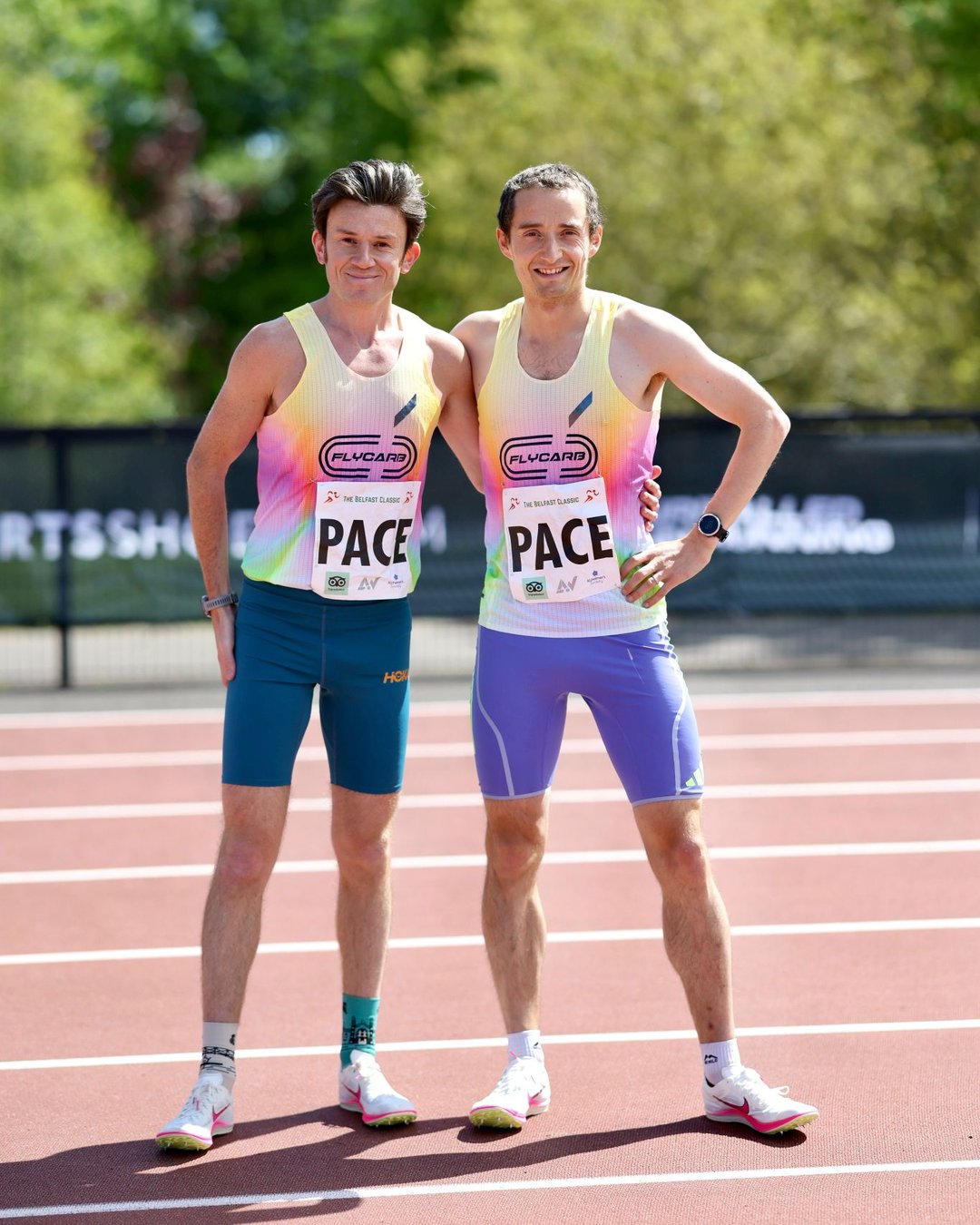
On Boxing Day, Jack Gray and Josh Elston-Carr had a problem. Their business was growing, but the way they were running it could not keep up with demand.
Both still had full time jobs. Around those jobs came mixing, packing and trips to parcel shops. Early mornings, late nights and weekends had become part of the routine. Even the Christmas holidays offered little relief.
"We've gotta find a way to make this more scalable," Josh remembers thinking.
It was an early turning point for the business now known as FlyCarb. What had started with two runners curious about sodium bicarbonate was becoming something that needed more than their spare time and kitchen space.
The friendship behind it, however, began long before the first order.
A cold night in Cambridge
Jack had moved to Cambridge for work, while Josh had recently graduated from Cambridge University. The pair first met at a local running club session on a cold, dark evening almost a decade ago.
"As sport tends to do, that kind of brought us together," Jack remarks.
For years, running was the connection. Then, in September 2024, it became the starting point for a business.
They had noticed more athletes using sodium bicarbonate to support performance. They wanted to try it themselves, but the cost of some existing products put them off.
"We kind of wanted to have a go, but we didn't want to pay the price," Josh explains.
They began experimenting, developing a product and testing it themselves before sharing it with friends and clubmates. Encouraging feedback gave them a reason to keep going.
That first audience mattered. These were people who knew them as runners, who could ask questions at training and tell them directly what they thought.
Jack believes that familiarity helped the business build trust quickly. Their reputation in the local running community gave those early conversations a foundation.
The kitchen years, condensed into months
They jokingly call the beginning their "Breaking Bad phase". In practice, it meant turning their kitchens into workspaces and taking responsibility for almost every part of the operation.
Jack recalls how they arranged food safety checks through the local council as they established the business. One founder would package the bicarbonate, the other the accompanying energy mix. Then came dispatching the orders themselves.
It allowed them to start small and find out whether there was demand before committing to larger scale manufacturing. But demand soon created its own pressure.
"Apart from Christmas Day that year," they were either packing bicarbonate or doing their normal jobs.
After roughly three months, they moved production to a factory in England. Automated processes and more professional packaging made it possible to fulfil orders faster, while freeing them to develop products and think about the business beyond the next parcel.
They now work full time for FlyCarb. The challenges have changed with that progress.
Josh reaches for a comparison familiar to anyone who has chased a faster time.
It doesn't matter whether you're running a 20-minute 5K or a 15-minute 5K. If you're pushing as hard as you can, it's still hard. Josh, FlyCarb co-founder
Growing the business has brought new difficulties involving overseas markets, different sports and working with athletes. Nevertheless, Jack sees those as problems they once would have been pleased to have.
Making the marginal gain usable
At the centre of the business is bicarbonate, a supplement with an established place in sports performance research.
In simple terms, it increases the blood's buffering capacity, helping the body handle hydrogen ions associated with intense exercise. The Australian Institute of Sport identifies evidence for benefits in certain intense efforts, including middle distance running and rowing. Individual responses vary, and stomach discomfort can offset the potential benefit. That evidence concerns sodium bicarbonate generally, rather than proving the performance of FlyCarb's particular formulation.[1]
For Jack and Josh, part of the challenge is making the experience of taking it more appealing.
Their original product was unflavoured. Since then, they have introduced flavoured options and a caffeinated version, alongside work on further products.
I was kindly given the chance to try their mango mix before my half marathon race ahead of our conversation. Having used other bicarbonate products, I was pleasantly surprised by the taste of FlyCarb's mango mix and I also felt stronger in the latter stages of the race. While my experience was positive, it is impossible to know how much of that performance was attributable to the product itself.
Beyond the running club
Running remains their biggest market, but their Cambridge connections have also helped them develop relationships in rowing.
Jack describes seeing rowers they had worked with go on to become world champions as a particularly proud moment. For him, the significance was the distance between that achievement and the kitchen operation of the early days.
Josh is equally proud of the wider reach they have built. At the time of our interview, he says FlyCarb was selling its products in Australia, New Zealand, Japan and across Europe.
Reflecting on that growth, he describes how "two guys in Cambridge selling to local runners" had become a business reaching athletes around the world within two years.
However, there have been mistakes along the way. Josh points to the rebrand as one example. Changing the name affected their search engine visibility and made it harder for people to find them.
His advice is to accept that learning will involve getting things wrong.
"Don't worry about making things perfect before you put yourself out there."
Jack's lesson is about resisting the pressure to become someone else when starting a business. He believes that "being authentic and being honest and staying true to yourself" matters more than trying to fit a particular image of what an entrepreneur should be.
Their friendship helps with that work. Different skills give them different ways to approach problems, while knowing each other beyond the business makes difficult days more enjoyable.
Looking ahead, Josh wants FlyCarb to reach more countries and explore opportunities in sports such as cycling and triathlon. Jack wants them to keep enjoying the journey while preserving the connection to athletes that helped them begin. The scale may have changed and the ambition has grown, yet FlyCarb's future may depend on preserving the same sense of community that first turned training partners into customers and customers into supporters.
As Josh puts it, "What really motivates us is helping people achieve their goals."
[1] Australian Institute of Sport, Sodium Bicarbonate.
Founder accounts and quotations are drawn from Daniel Jelfs's interview. Minor repetitions and verbal fillers have been removed from quotations without changing their meaning.