On His Own Terms: Inside Lowie van Eck's Running Solo
With around 6% vision, Lowie van Eck has run a marathon without a guide and completed 100 miles. His next challenge will take him abroad, with the location kept secret.
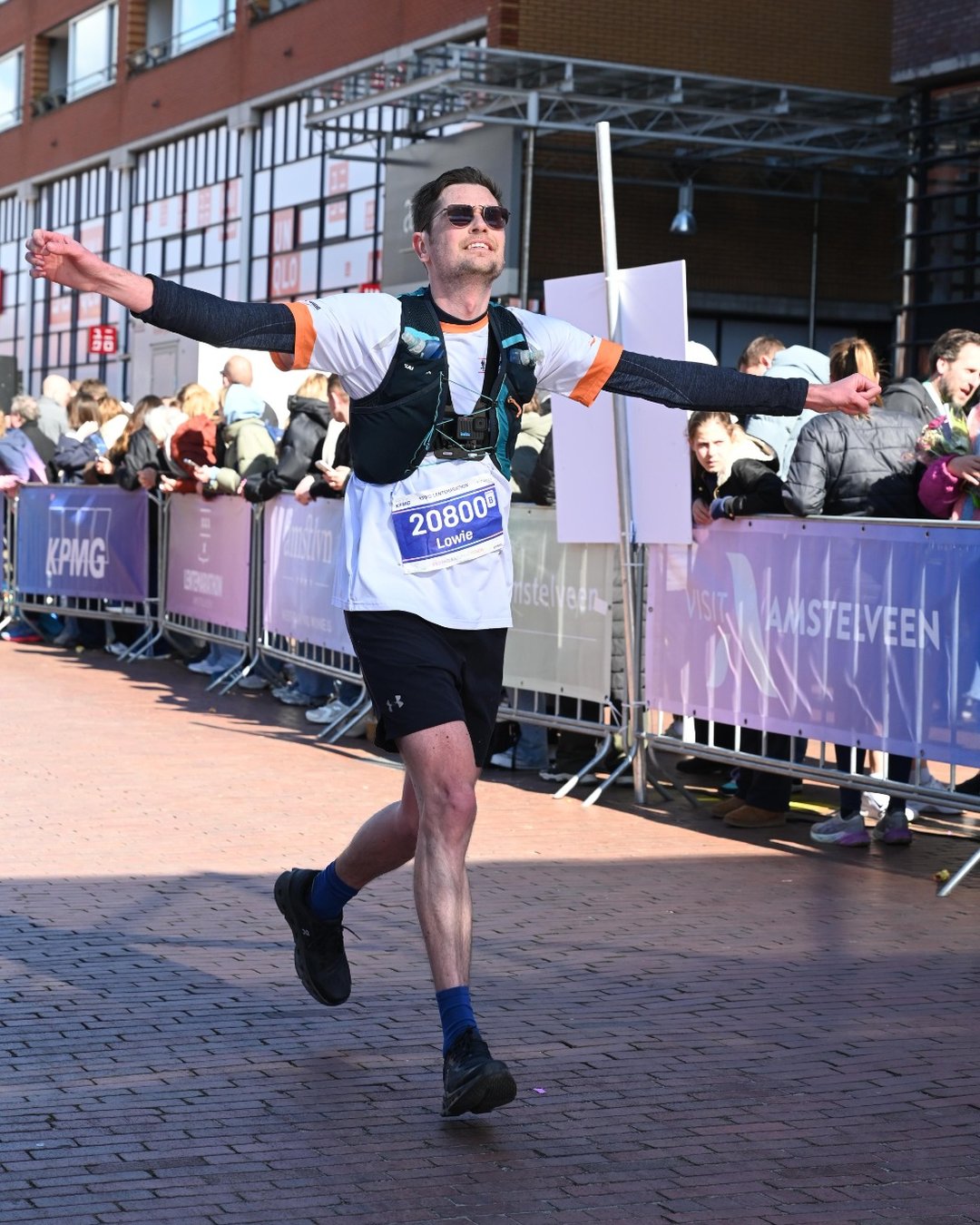
Lowie van Eck is planning a marathon he will tell nobody about.
His friends and family will not know where he is racing. He intends to travel abroad, find the start line and run alongside people who may never realise he has a visual impairment.
For someone who has already completed 100 mile races, the distance might seem the straightforward part. Van Eck thinks it probably will be.
"I think running the marathon is the easiest thing about the whole project."
The greater challenge is getting there and navigating somewhere unfamiliar without someone already waiting to help.
Van Eck describes having around 6% vision. Yet, through his Running Solo project, he is exploring how much he can do independently, and what that independence actually means.
A different route to the same dream
As a teenager, when his eyesight was better, Van Eck imagined running a marathon alone. By the time he completed his first marathon in Rotterdam in 2024, the circumstances had changed. He ran with a guide. However, the ambition to complete one solo still bugged him.
Later that year, he researched other runners with visual impairments using technology and spoken navigation. He wanted to explore whether he could race without those aids.
"Is it possible to run it solo?" he remembers asking himself.
Finding an answer required preparation well beyond a training plan. At races beforehand, guides stayed nearby, allowing him to navigate for himself, intervening only when an obstacle required a warning.
Then came almost two hours on Google Street View with someone from the marathon organisation. Together, they worked through the route, identifying obstacles and the turns he would need to recognise.
In 2025, he completed the marathon solo. The support beforehand had helped make the independence on race day possible.
The effort the results cannot show
Van Eck began running ultras in 2024 and completed his first 100 mile event in 2026. Longer distances bring a challenge that finishing times cannot fully explain.
He describes his vision as blurred. He can see what is around him, but making sense of the ground ahead demands attention, particularly when the surface becomes uneven or slippery.
At a recent Dutch Backyard Ultra, rain and mud made that concentration exhausting. Alongside the physical effort, he had to keep assessing where to place his feet.
He encountered the same problem at a 50K mountain race in Austria in 2025. Arriving from the flat Netherlands, he believed he could manage without poles.
After the first mountain, his guide questioned whether they should continue towards the second. Van Eck was determined to carry on. Unfortunately, they eventually arrived ten minutes too late and his race ended in a DNF.
He returned better prepared in 2026, bringing poles to feel the ground, which helped ease the demand on his eyesight and helped his legs navigate the uneven surfaces. This time, he finished.
When asked for his favourite race, he chooses that Austrian event, precisely because of what happened the first time.
"I came back to restore my pride."
Twenty laps around the school
Away from the mountains, much of his training happens at work.
Van Eck teaches primary school children who are blind or visually impaired. When the working day finishes, he sometimes runs twenty laps around the school building while colleagues watch from inside.
"There he goes. There he goes again," he recounts, describing their reaction.
The familiar 400 metre route has a broad path and no cars. He can listen to music and think about something other than his next step. At weekends, routes around Gouda offer water, nature and a change of scenery.
Since 1 January 2026, he has maintained a daily running streak, generally covering a little over four miles each day and around 50 kilometres a week.
What his students taught him
Teaching has changed more than where Van Eck trains. It has also changed how he understands his visual impairment.
Before working at the school, he often concealed it. Even some ex-partners he dated did not know about his visual impairment.
His students helped him reconsider that approach, teaching him that, "asking for help can be good".
The preparation for his solo marathon demonstrates this well. While guides helped him practise and someone from the organisation familiarised him with the route, the achievement remained his own, as he ran the race himself.
That experience sits alongside a frustration with how visual impairment is understood. People often assume there are those who can see and those who cannot, leaving little understanding of the experiences in between.
"The grey area between blind and not blind," he explained, "that's the hardest thing, I think."
The grey area between blind and not blind, that's the hardest thing, I think. Lowie van Eck
Someone passing him in the street may notice nothing. The effort involved in navigating that street can remain invisible.
A marathon nobody knows about
That invisible effort is part of the thinking behind his international marathon in 2027.
At the time of our conversation, Van Eck was keeping the location and timing a secret. He wants to experience travelling and racing without people anticipating his needs because they already know his story.
He hopes the project will encourage greater understanding of disabilities that are not immediately apparent.
He also wants to run under three hours and thirty minutes, introducing structured marathon training to give his speed more attention.
"I believe that I can do it on my own."
Beyond that race, he wants younger runners with visual impairments to find their own opportunities. He talks about eventually coaching, and about seeing others step forward to achieve things like those he is attempting now.
There is little suggestion that he is running out of ideas himself.
"I can think about one hundred new projects, so I don't think I will stop soon."
Choosing the next challenge
For all that ambition, Van Eck is learning to be selective.
After covering more than 100 kilometres at the Dutch Backyard Ultra, he asked himself whether he wanted to return the following year. For now, the answer is no. He has achieved something that matters to him there.
He might return in three or four years. For now, he wants something different.
His advice reflects that balance. "First of all, keep going." Then comes the part his students helped him understand, "If it's hard, search for help and then keep going afterwards."
And through it all, "do the things that make you happy".
Somewhere in 2027, there will be a marathon whose location remains a secret. Van Eck wants to discover how much he can do for himself, while choosing challenges that make him happy.
The next start line is his to choose.