Unfinished Business: Olivia Forrest's Comeback
At fifteen, Olivia Forrest stood on the European Under 18 podium. Then came something she had never experienced before: injury. Now back in training and targeting another Great Britain vest, she says the time away changed her relationship with running for the better.
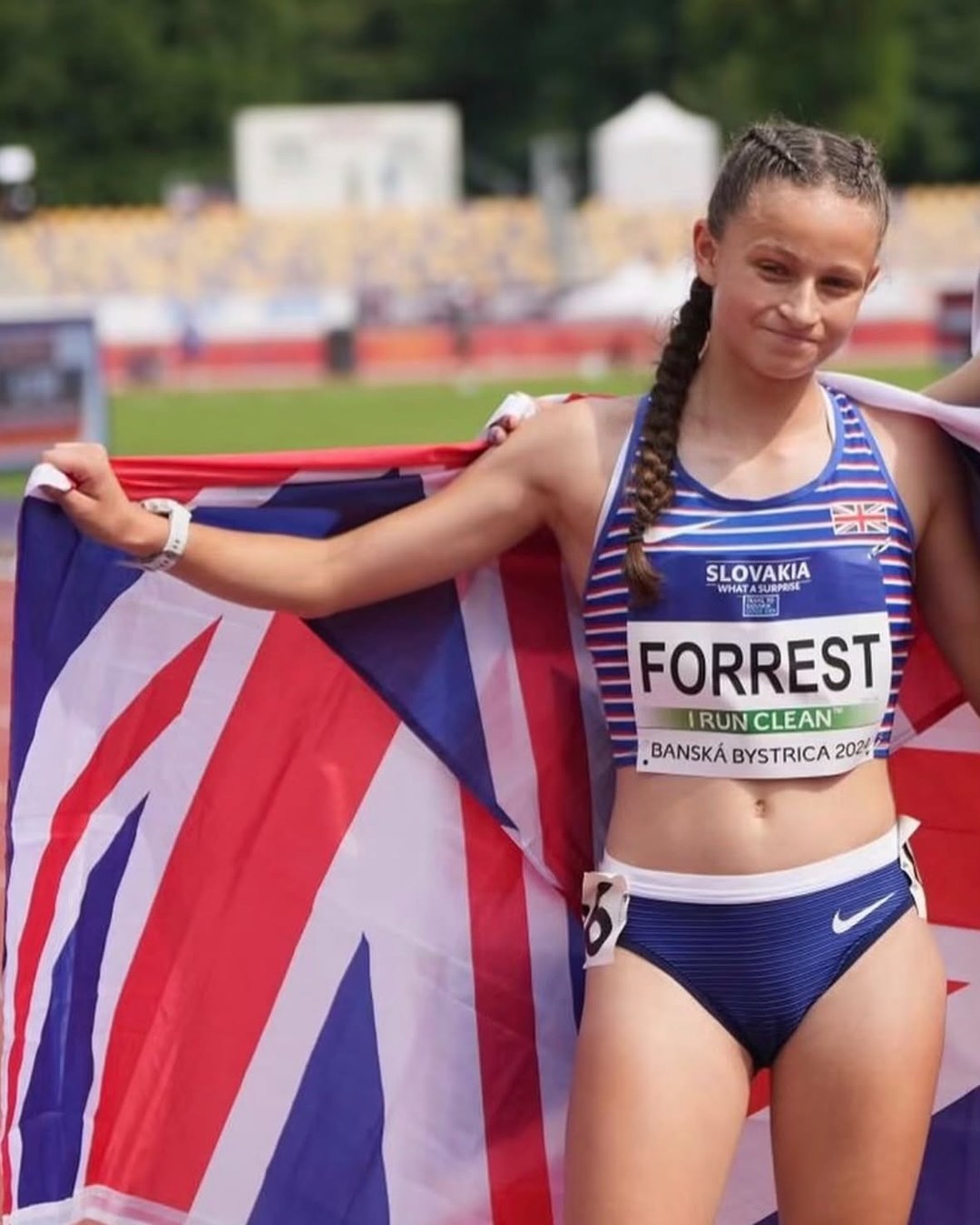
For a period, winning became routine for Olivia Forrest, with a string of cross country victories leading to national titles. An England vest was replaced by a Great Britain vest. Then, at only fifteen years old and the youngest athlete in the entire race, she stepped onto the European Under 18 podium with a bronze medal around her neck.
From the outside, the trajectory looked almost effortless. It was anything but.
Behind the results was an athlete placing increasingly heavy expectations on herself. Then came something she had never experienced before: injury. A stress fracture in her leg in late 2025 stopped her running. A stress response in her other leg followed in early 2026. Races disappeared from her calendar while athletes around her continued competing and improving.
Yet, looking back, Forrest believes that period may have changed her relationship with running for the better. "I've really found the beauty in the process," she explained. "I prioritise enjoyment instead of thinking, right, I'm going to do well."
Now, back training and targeting another Great Britain vest, the next stage of Olivia Forrest's career is beginning.
From parkrun to the front of national races
Running was already part of Forrest's family. Her father ran, as did her grandfather, and her introduction to the sport came through parkrun. She initially completed 5K events with them before discovering junior parkrun and racing over 2K almost every week.
Triathlon soon followed. Running remained her strongest discipline, but swimming became a consistent part of her training and provided an introduction to cross training long before injury made it a necessity. Forrest believes that this multi-sport background has aided her early development. "Cross training helps. It's a really good low-impact way to stay active and keep training, and I think all the disciplines complement each other."
The major change came when she began being coached by her father after he set up Brentwood Beagles Athletics Club in 2022. Before that, Forrest remembers enjoying running without considering herself one of the best athletes. "I wasn't good at all. I could run and I was all right, but even my younger sister was beating me!"
Then the results started changing. She began beating athletes in Essex she had previously looked up to, earned her first county vest and saw her track times fall rapidly as she discovered that the longer distances suited her.
The real breakthrough arrived during the cross country season of 2022 and 2023. Forrest finished second at the South of England Championships, then fourth at the National Championships despite being a year down. "I genuinely couldn't believe that I was running with them." Now Olivia was competing with and beating runners she had previously considered far ahead of her.
At English Schools she finished third and earned an England vest. By then, something had changed. "That cross country season was the one where I realised that I was actually at the top," she reflected. "That meant that the 2023 season I was a lot more confident. That's when I started winning properly."
When winning becomes expectation
Success brought confidence, but it also produced something less visible: pressure. Forrest describes a unique contradiction. Winning made her believe she belonged at the front, but every victory also increased the expectation that another one should follow. "When you keep winning, you keep building confidence and knowing that you can do it, but it's a lot of pressure."
Much of that pressure came from within. Before races she would feel intensely nervous, sometimes questioning whether her legs even felt ready to compete. Then the gun would go and everything would change. "As soon as I started, I actually felt really good," she recalled. Remembering previous victories became one way of dealing with those nerves. "Why can't I win again? You know you have the confidence. You know you have the ability to do it."
Her racing style reflected that growing confidence. On the track, Forrest liked control. She was happy taking the race from the front and trusting that she could still produce a final lap when others might expect the leader to fade. Cross country was different. She disliked the chaos of the start, often finding herself farther back before steadily moving through the field. But once she reached the front, she rarely surrendered it to anyone.
A European podium at 15
By 2024, representing Great Britain at the European Under 18 Championships had moved from a distant possibility to a realistic target. Forrest achieved the qualifying standard and then produced another major personal best shortly before selection. Suddenly, she knew she was going. "The whole experience was surreal."
However, the nerves remained. She remembers the warm-up, the call room and the build-up to the 3000m final. But when she stepped onto the track, nerves briefly gave way to excitement. "I was just soaking up all this energy."
The race itself did not unfold exactly as she had imagined. Forrest believes she did not completely follow the plan and was disappointed with aspects of how she deviated from the race plan. Nevertheless, she crossed the line in third place.
At the time, her disappointment clouded the achievement. Looking back now, the perspective is different. "I was the youngest in the race and beating all those people, it was just crazy that I was able to do that."
She now calls the bronze medal her greatest achievement in running. More importantly, it showed her what international athletics felt like. The experience did not satisfy the ambition. It increased it.
"That really motivated me to keep going because I saw what it was like to be at that level."
Then running stopped
The following year was more difficult. Forrest felt her 2025 season had not delivered everything she wanted, although it ended with a national 3000m victory. Then, the day after that race, she felt pain while training.
The diagnosis was a stress fracture, attributed to an earlier impact injury unrelated to running that had initially been brushed off.
For an athlete who had never experienced a serious injury before, the interruption was difficult to manage. When she returned, she was desperate to race again and threw herself quickly into the cross country season. "I'd just come back from injury, so of course I was disappointed with how I was running."
Progress gradually returned, but then came another setback. This time, Forrest suffered a stress response in her other leg. The second injury was approached differently. She had learned from the first.
Cycling, swimming and strength work became central. She continued going to training, seeing her friends and even helping with coaching. Rather than focusing entirely on what she could not control, she began thinking about what she could control.
Now, after rebuilding through the summer, Forrest is nearly back to her pre-injury routine. "Training has been really fun. I've definitely been enjoying it a lot more than I was before I got injured."
Learning to enjoy running again
Injury also forced Forrest to confront something deeper. Before it, results had become tied too closely to how she judged herself as an athlete. "I was thinking more about the result rather than the process," she explained. The mindset became unforgiving. "I need to do well in this race. Otherwise, I'm not a good runner."
Being unable to race changed that. Forrest realised how much she actually missed running, but also recognised that the sport had to involve more than results.
I've really found the beauty in the process and all the hard things I have to do. Olivia Forrest
Poor races are now taken as learnings. Start lines are approached with enjoyment first, results second. She knows that could become harder again if she returns to the front of major races and expectations start increasing, but she does not want to forget what injury taught her. "That will always be a priority of mine, to make sure I'm still enjoying it."
Her father and coach, Paul Forrest, has noticed a change from behind the scenes.
"What's changed most in Olivia is how she handles the hard days. Winning a European bronze showed what she's capable of, but the injury setbacks since have taught her something just as valuable. She's become far more patient, more honest about how her body is responding, and more curious about the detail of her own training. She doesn't just run the sessions now, she understands them. That maturity is what excites me most. The talent was always there, but the resilience and self-belief she's built through the tougher spells will be what carries her forward."
The road back
Forrest is not trying to force the comeback. Cross country comes first, and she wants to enjoy it. "I love cross country so much," she says. "I love it more than track."
The bigger expectations will come next summer. A return to international competition is firmly in her thoughts, particularly the European Under 20 Championships. After missing international opportunities through performance and injury, the motivation is stronger than ever. "I don't want to miss out on another opportunity like that again."
Even the event remains undecided. Forrest could race 1500m, 3000m or potentially 5000m.
Beyond junior athletics, the ambition stretches much further. The Olympics and World Championships are the dream. Forrest talks openly about wanting to return to the feeling she experienced wearing a Great Britain vest, and one day perhaps competing for a global medal. "To win a medal on the track would just be the absolute dream."
First, there are decisions closer to home. Forrest is completing four A Levels and is deeply invested in her academics, particularly theology, which she hopes to study at Oxford. She is also considering the possibility of studying and competing in the United States. A visit to Oregon last summer strengthened that interest, while simultaneously reminding her how much she wants to return to international athletics. For now, she is keeping both possibilities open.
The same could be said for her running.
Two injuries have interrupted one of Britain's most promising junior talents. Yet, the story is far from complete. Forrest now has a clear understanding of the pressure that comes with winning, the fragility of progress and the importance of finding value in the work itself.
Her advice to younger athletes reflects exactly what she has learned. "Enjoy it."
Then comes the second lesson. "Focus on yourself. Ignore what other people are doing. When you stop focusing on what other people are doing and just do things for yourself, that's when you're going to find the success."
For Olivia Forrest, the next success is still being written.